Best Lima City Tour – Historic Centre, Love Park & Pisco Sour Experience

Table of Contents
Best Lima City Tour: History, Culture, and Heritage in the “City of Kings”
Lima, known as the “City of Kings”, brings together layers of history that reflect the evolution of Peru from pre-Columbian times to the present day. Its streets, monuments, and cultural expressions offer a synthesis of indigenous, colonial, and modern influences.
The Best Lima City Tour represents a thematic route through the city’s main cultural landmarks. Rather than focusing on promotion, this overview provides information for travelers, students, or decision-makers interested in understanding Lima’s heritage and urban identity.
Historic Centre of Lima – A UNESCO World Heritage Site
The Historic Centre of Lima, declared a World Heritage Site by UNESCO in 1988, is one of the most representative colonial ensembles in South America. Its architecture, layout, and monuments preserve the essence of the Spanish foundation and the early Republican period.
Key points of interest include:
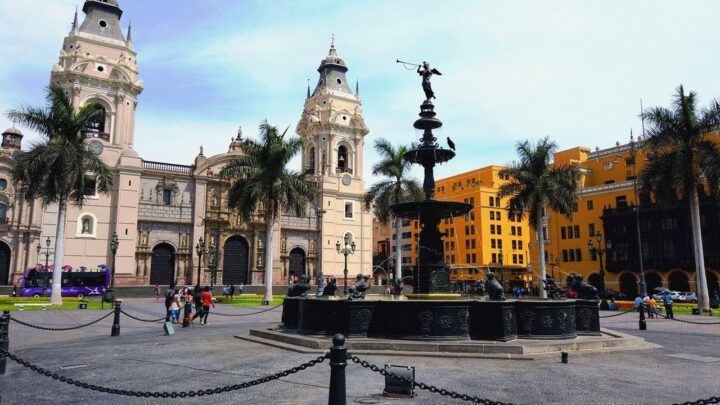
• Plaza Mayor, the original nucleus of the city founded in 1535.
• Surrounding buildings such as the Government Palace, the Municipal Palace, and the Cathedral of Lima, which displays architectural styles ranging from Renaissance to Neoclassical.
• Various traditional shops and handicraft spaces where Peruvian artisans present their work.
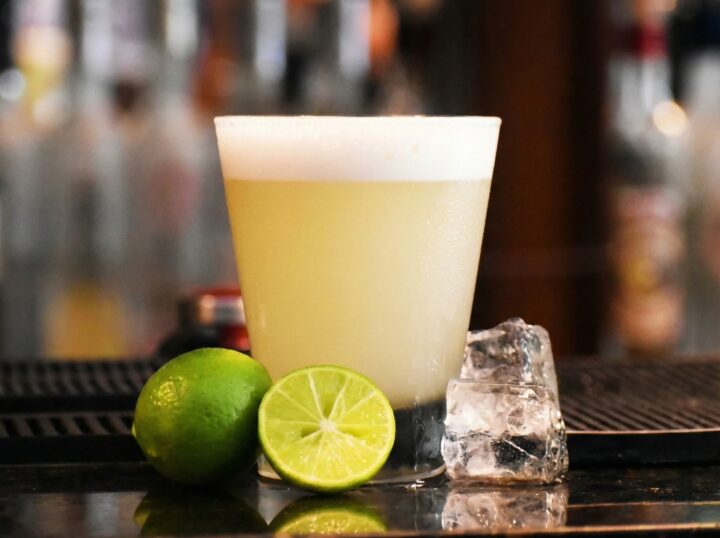
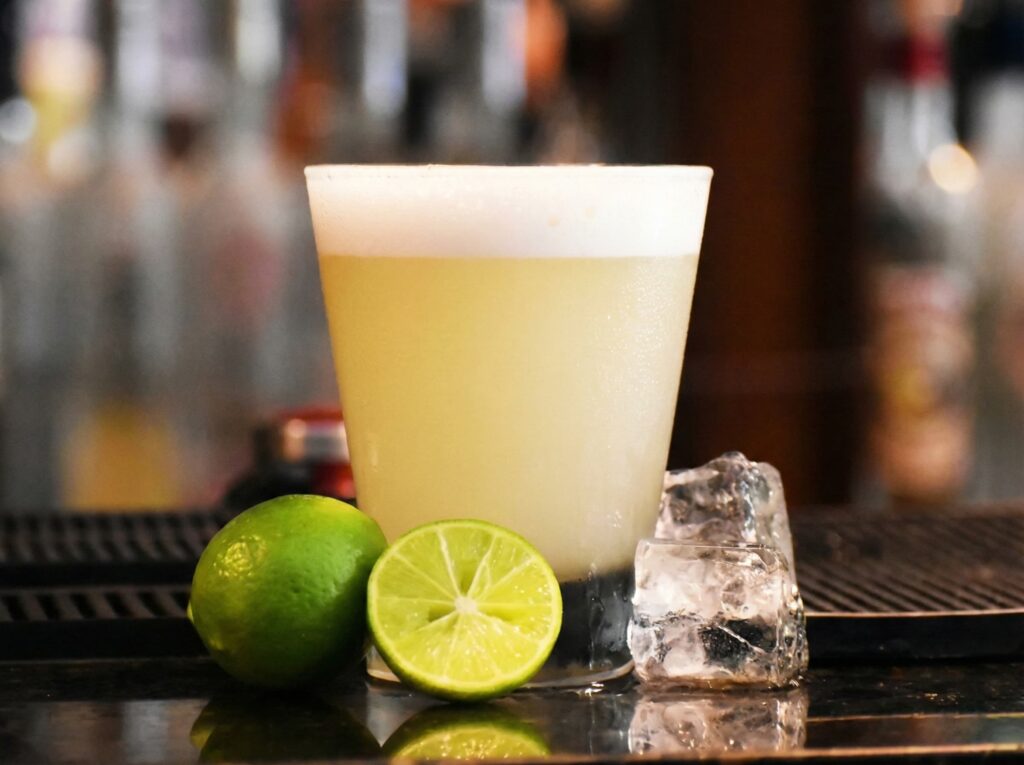
This area allows visitors to understand Lima’s political and religious centrality during colonial times and its transformation into a modern metropolis. The presence of the Pisco Sour, Peru’s national cocktail, often symbolizes the blending of local and foreign traditions that characterize the city.
Love Park (Parque del Amor) – Art and Poetry by the Sea
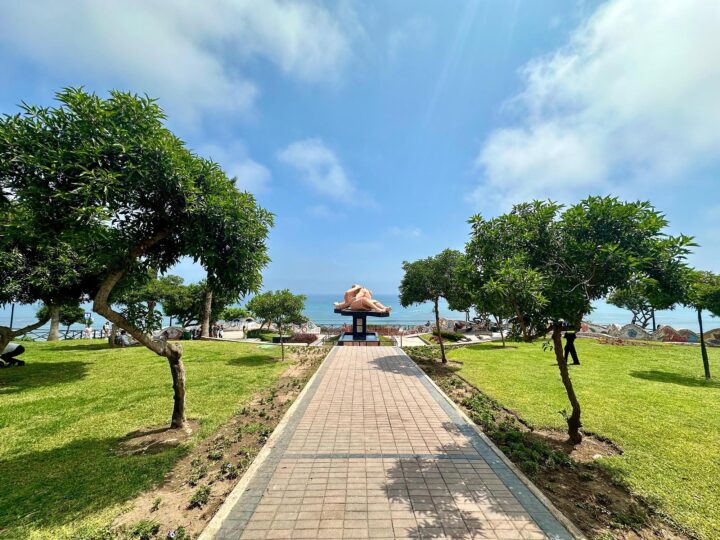
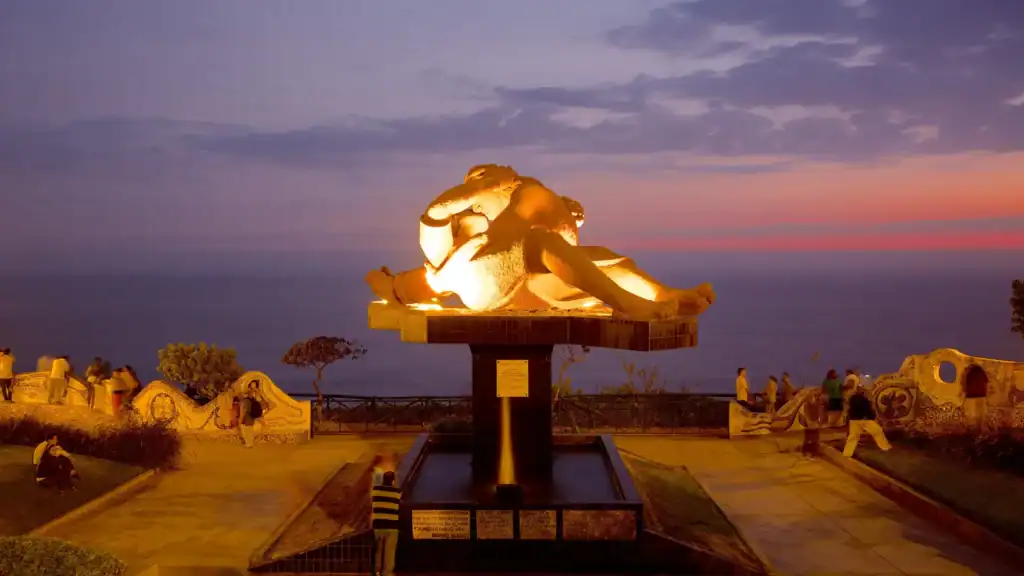
Located in the coastal district of Miraflores, Love Park combines urban art, landscape design, and literary symbolism. Inaugurated in 1993, it was inspired by the poetry of Antonio Cisneros and designed as a public space celebrating affection and cultural identity.
At its center stands “El Beso”, a sculpture by Víctor Delfín, depicting two figures in an embrace. Around it, colorful mosaic benches display verses from Peruvian poets. The park’s location along the cliffs of the Pacific Ocean provides panoramic views of the coastline, making it an emblematic space for contemplation and photography.
From an urban perspective, Love Park illustrates how contemporary Lima integrates art and nature to create public spaces that promote emotional connection and civic pride.
Huaca Huallamarca – The Pre-Inca Legacy
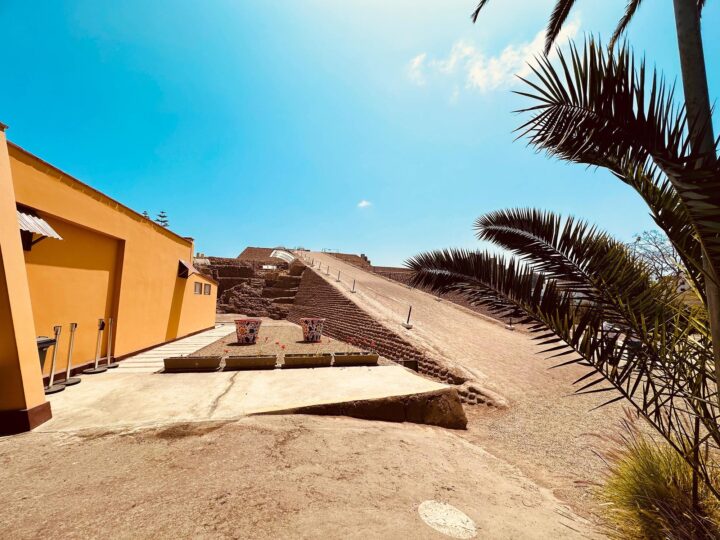
In the district of San Isidro, Huaca Huallamarca stands as one of Lima’s most significant archaeological sites. This pyramid-shaped structure, built by the Lima culture around the 4th century A.D., is made of adobe and originally served ceremonial and funerary purposes.
Archaeological research has revealed several occupational phases, showing how pre-Inca societies adapted to the arid coastal environment. The adjacent site museum exhibits ceramics, textiles, and human remains that provide insight into the social and ritual practices of ancient Lima.
Huaca Huallamarca also demonstrates the coexistence of past and present: surrounded by modern buildings, it highlights the ongoing dialogue between heritage preservation and urban development.
Bridge of Sighs – The Bohemian Heart of Barranco
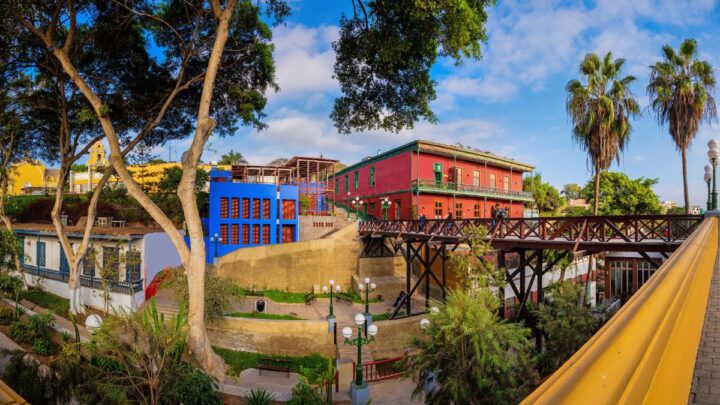
The Bridge of Sighs, located in Barranco, represents one of Lima’s most recognizable landmarks. Constructed in 1876, the wooden bridge connects two parts of the district separated by a natural ravine.
Barranco, historically a seaside resort, evolved into Lima’s bohemian center during the 20th century, attracting artists, writers, and musicians. The bridge is surrounded by art galleries, murals, and traditional cafés, reflecting the area’s creative identity.
A popular local legend maintains that anyone who crosses the bridge while holding their breath can make a wish, a tradition that adds an intangible cultural layer to this architectural feature.
Conclusion
The Best Lima City Tour route encompasses the city’s main cultural and historical expressions — from pre-Inca temples to colonial squares and modern urban art. Together, these spaces reflect the continuity and diversity of Lima’s identity through time.
For those studying or managing cultural tourism, urban planning, or heritage conservation, this overview serves as a reference framework for understanding how Lima integrates history, symbolism, and daily life into a coherent urban narrative.